
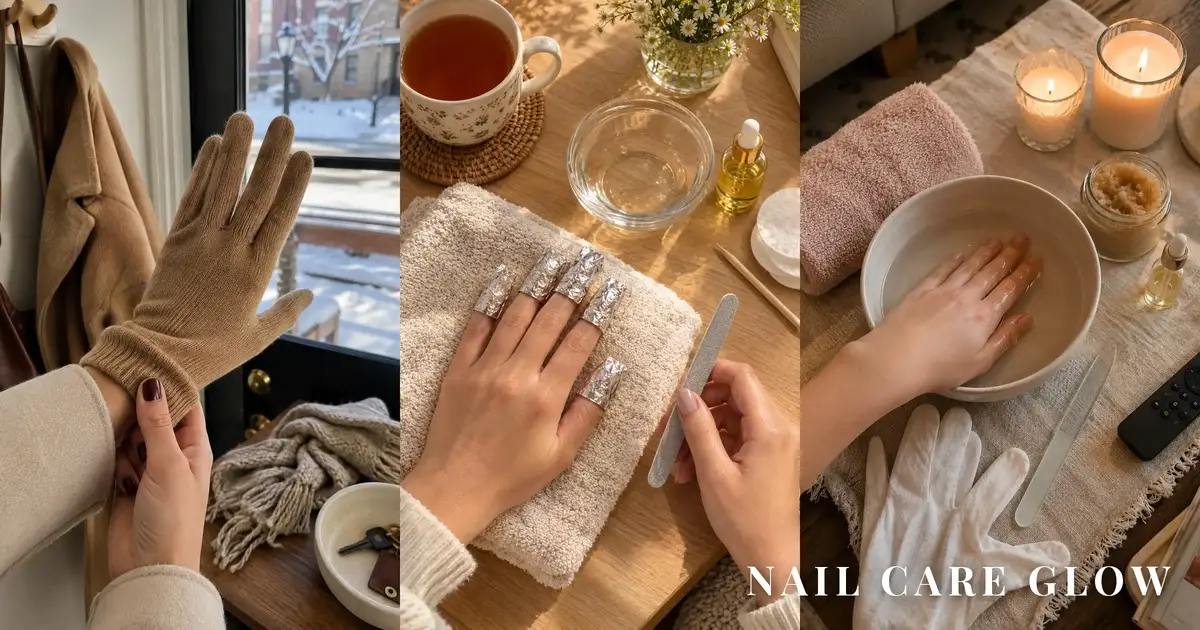
Most winter hand advice starts and ends with “use more lotion,” and that is exactly why so many of us still have cracked knuckles by January.
Lotion helps. But if you wash with harsh soap, rinse in hot water, and head into the cold with bare hands, even a good cream is just playing catch up. Your nails feel it too. They dry out along with your skin, so they start peeling at the tips, snagging on sweaters, and splitting right when your polish finally looks nice.
The fix is less about one fancy jar and more about small habits spread across your day: the sink, the car, the dish pile, your nightstand.
This winter nail care routine is built around those moments. Every step below is simple, cheap or free, and easy to keep up even on busy weeks. Start with two or three that fit your life, then add more once they feel automatic.
1. Swap Foaming Soap for a Creamy, Fragrance Free Hand Wash
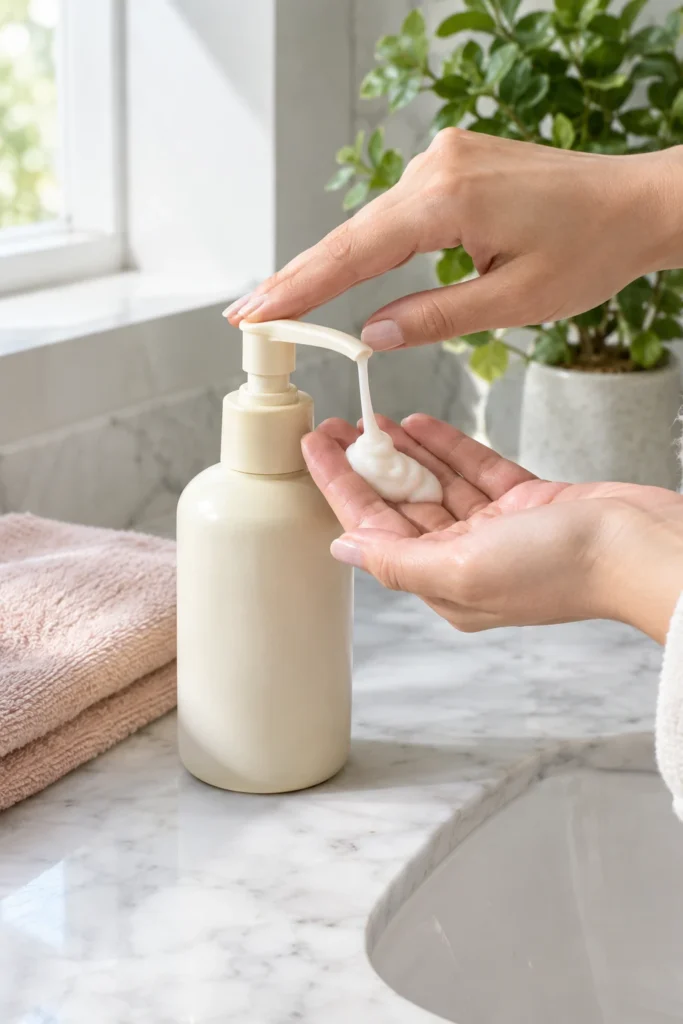
That tight, squeaky feeling right after you wash is not what clean feels like. It usually means the soap took more than dirt with it.
Foaming and antibacterial soaps can be strong cleansers, and in winter your skin has less oil to spare. A creamy wash handles everyday grime just as well but leaves some softness behind.
When you shop, look for:
- “Cream” or “moisturizing” on the front of the bottle
- Fragrance free on the label
- A lotion like texture, not a thin watery gel
2. Rinse in Lukewarm Water, Never Hot
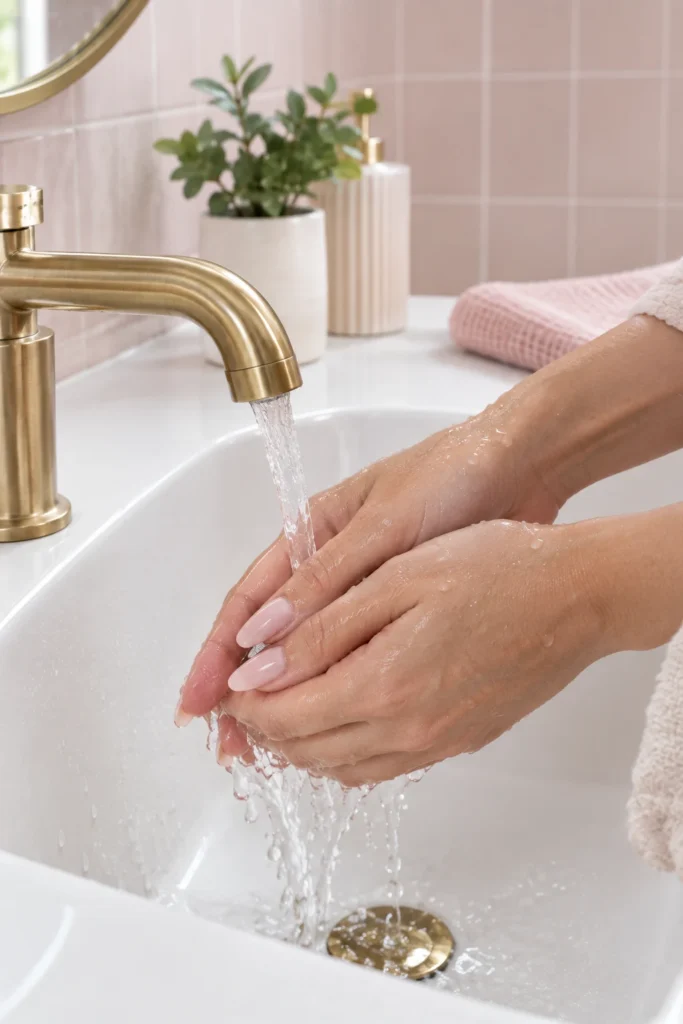
Hot water feels like the obvious choice on a freezing morning. It is also one of the quickest ways to dry out your hands.
Heat loosens the natural oils that keep skin soft, and they rinse down the drain with the soap. Lukewarm water cleans your hands just fine.
A quick way to judge it:
- It feels comfortable on the inside of your wrist
- No steam rises from the tap
- Your hands don’t turn pink afterward
3. Smooth On Hand Cream While Your Skin Is Still Slightly Damp
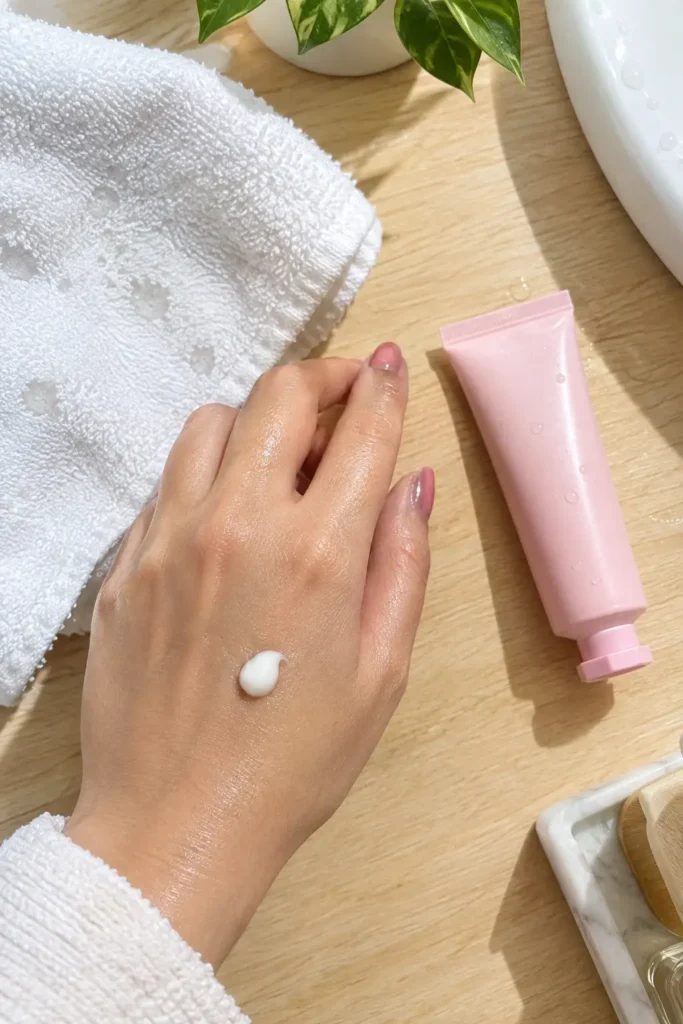
Pat your hands dry, but stop before they are completely dry.
Cream works best on slightly damp skin because it helps hold that leftover water in place instead of letting it vanish into dry winter air. On bone dry hands, the same cream tends to sit on top and feel greasy.
Timing matters more than amount. A pea size dab right after washing does more than a big blob an hour later.
4. Look for Ingredients That Lock Moisture In, Not Just Pull It In
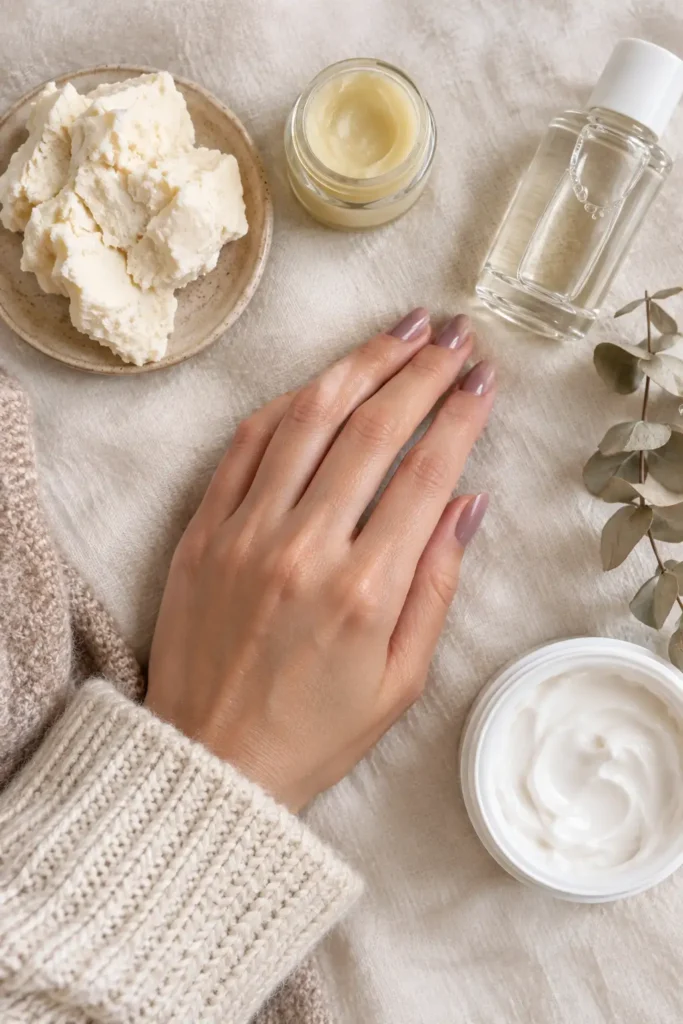
Two hand creams can feel the same in the tube and behave very differently on your skin.
Some ingredients pull water into the skin. Others form a light seal that stops it from escaping. In dry winter air, a cream that only does the first job can leave your hands tight again within an hour.
Scan the ingredient list for a mix of both:
- Water pullers: glycerin, hyaluronic acid, urea
- Sealers: shea butter, petrolatum, dimethicone
5. Work Cuticle Oil Into the Whole Nail, Not Only the Cuticle
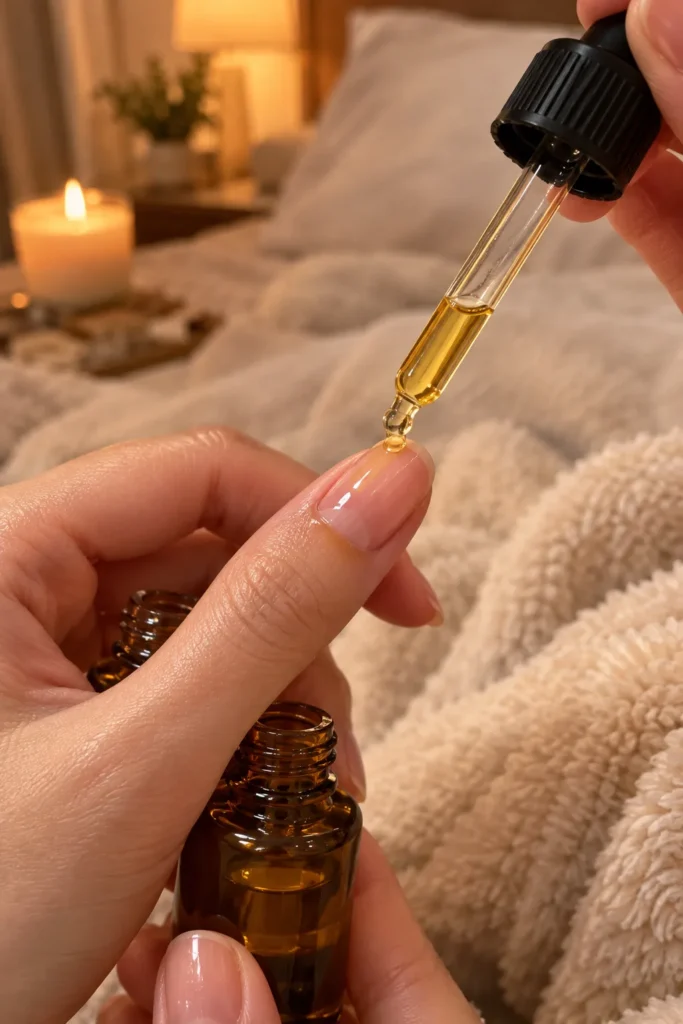
Most people dab cuticle oil along the skin at the base of the nail and call it done.
The nail itself dries out in winter too, which is why tips start peeling and catching on knit sweaters. A drop of oil spread over the whole nail, including the underside of the tip, helps it stay more flexible so it bends instead of splitting.
Good times to do it:
- Right before bed, when it can soak in undisturbed
- After removing polish
- Whenever your tips look white or chalky
6. Keep a Hand Cream Next to Every Sink and Sanitizer You Use
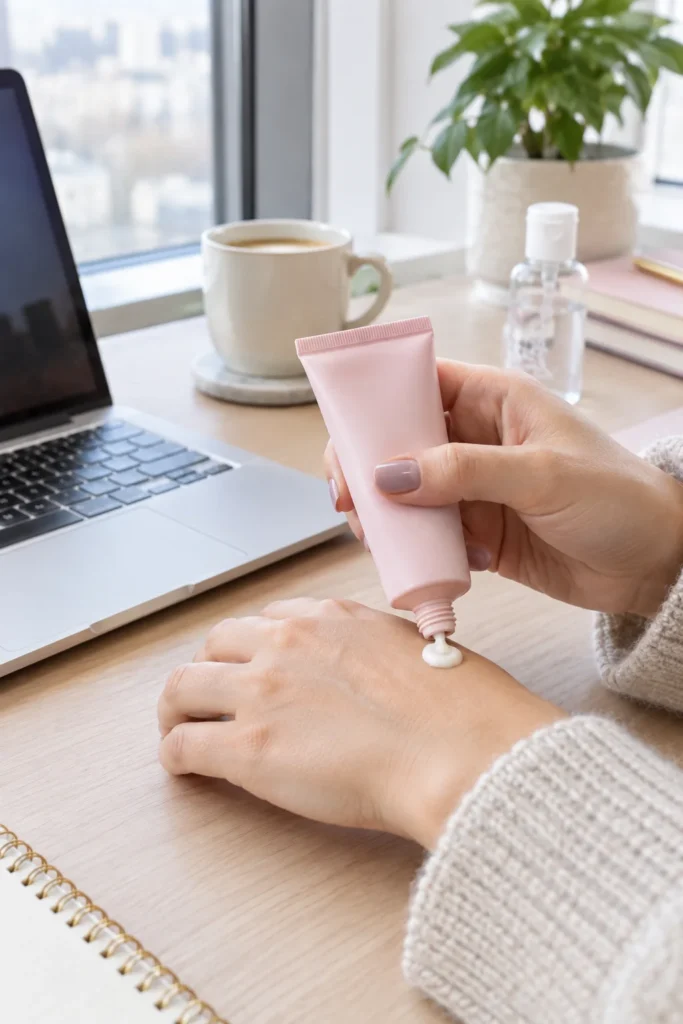
You wash your hands at the office, grab a paper towel, and head back to your desk. Your hand cream is at home on the bathroom shelf.
For most of us, the driest moments happen during the day, and the damp skin habit from item 3 only works if cream is within reach when you wash. Small tubes are cheap enough to keep several.
Hand sanitizer needs its own mention. Alcohol based gels are handy in flu season but can leave skin feeling papery. Let the gel dry fully, then follow it with a small dab of cream.
7. Wear Cotton Liners Under Rubber Gloves for Dishes
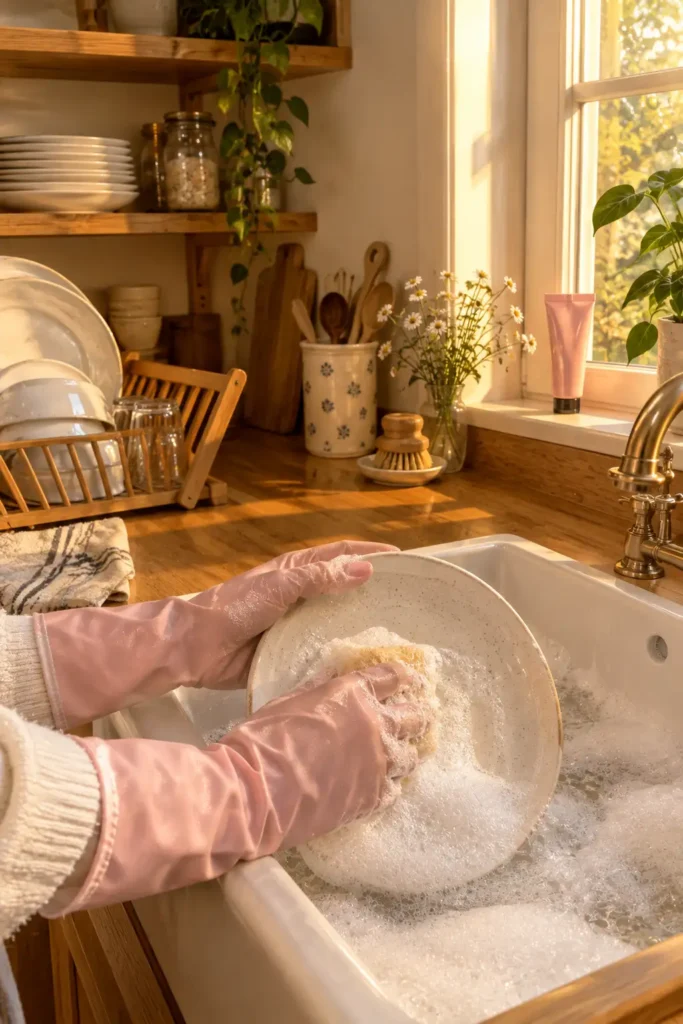
Softer hands after a full sink of dishes sounds unlikely, but a two layer glove setup gets you close.
Hot dish water and grease cutting soap are rough on skin and nails, and rubber gloves block both. The catch is that hands sweat inside them, and that damp skin dries out fast once the gloves come off.
A thin cotton liner fixes this:
- It soaks up sweat so skin stays dry inside
- Gloves slide on and off more easily
- Liners go straight into the laundry
8. Put Your Gloves On Before You Step Outside, Not After
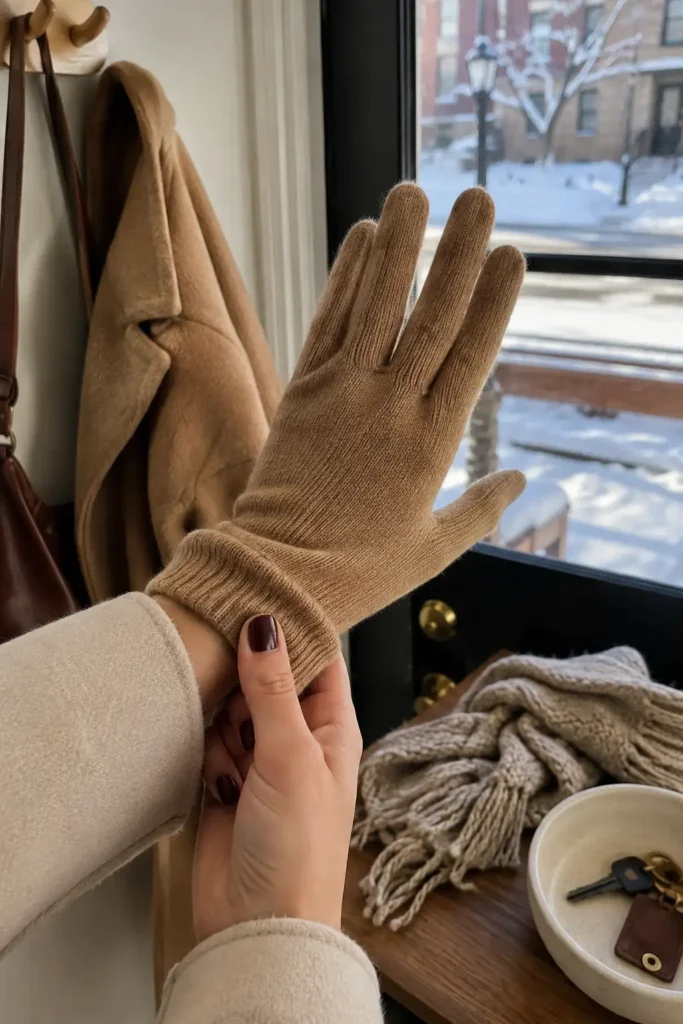
Gloves go on at the front door, not three blocks later when your fingers start to sting.
Cold wind and dry air pull moisture from bare skin quickly. By the time your hands feel numb, the knuckles are already getting rough. Your nails sit in the same dry air, which is part of why they feel snappier in winter.
A few things that make the habit stick:
- Keep a spare pair in your coat pocket and one in the car
- Pick touchscreen fingertips so you aren’t pulling them off to text
- Choose soft lined gloves over scratchy wool against bare skin
9. File Your Nails a Little Shorter With Softly Rounded Tips
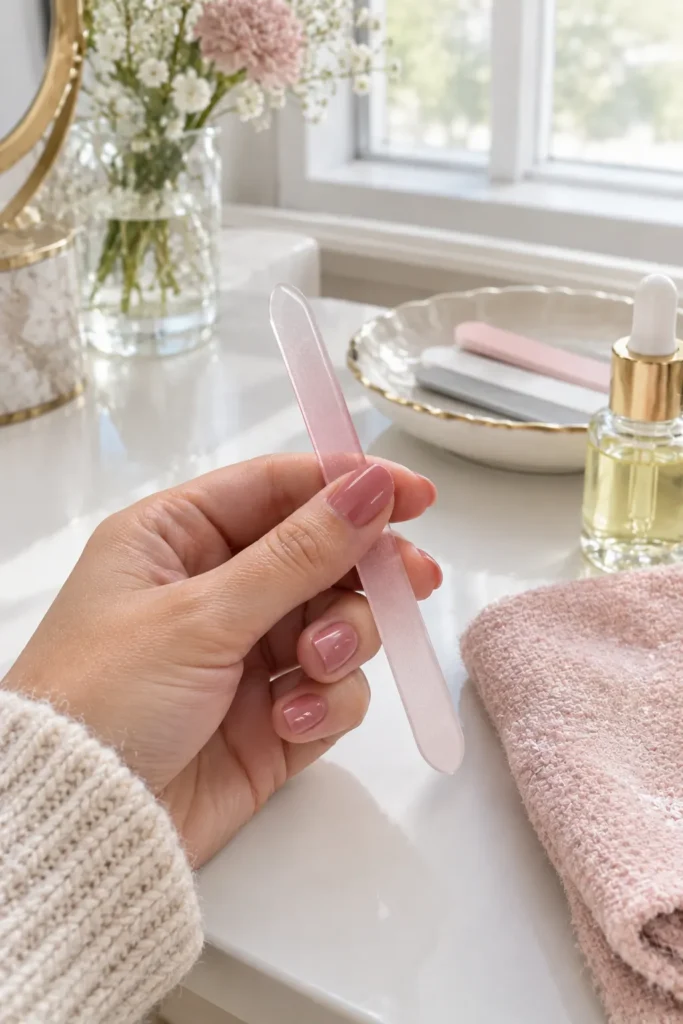
Sharp square corners always seem to be the first part of a nail to chip once the heating comes on.
Winter nails are drier and less bendy, so long lengths and pointed corners catch on zippers, coat buttons, and car doors. A slightly shorter length with a soft round or squoval tip gives the nail less to snag.
Filing tips for dry nails:
- Use a glass or fine grit file, not a rough metal one
- File in one direction instead of sawing back and forth
- Finish with a light sweep under the edge to smooth it
10. Seal Dry Hands Overnight With a Thick Balm and Cotton Gloves
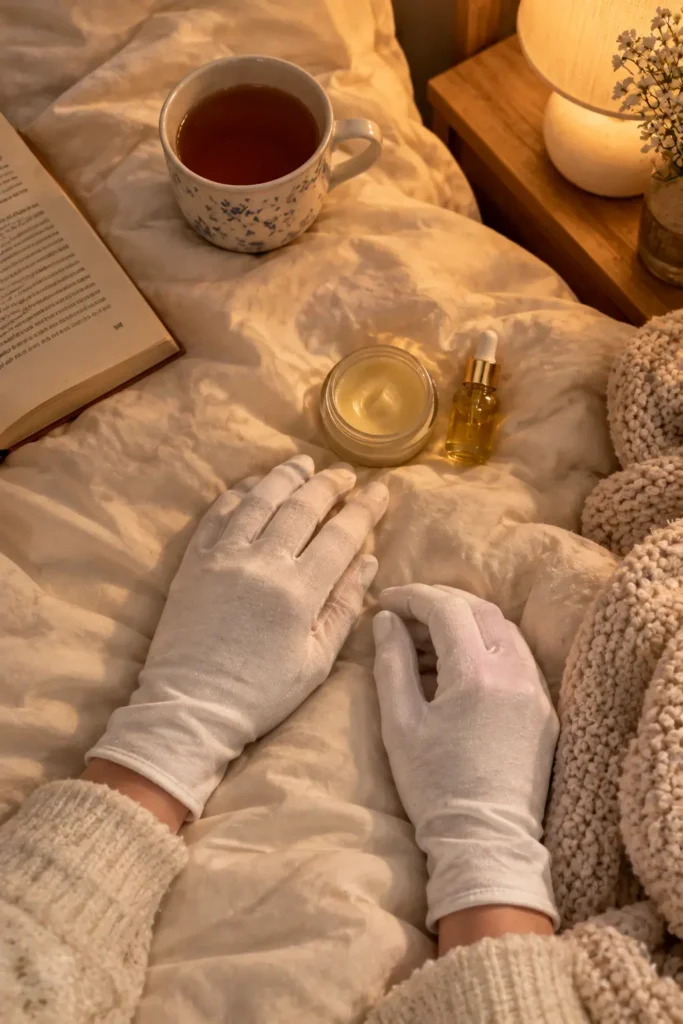
Shiny balm and a pair of plain white cotton gloves look a little silly at bedtime, but they do more than any daytime cream can.
Overnight is the one stretch where your hands aren’t washed, wiped, or rubbed on anything for hours. A heavy layer has time to soak in instead of ending up on your phone screen.
What to use:
- A petrolatum or shea based balm, not a light lotion
- Cotton gloves, which breathe better than plastic
- A drop of cuticle oil first, if your nails are peeling
11. Paint a Strengthening Base Coat Under Every Color
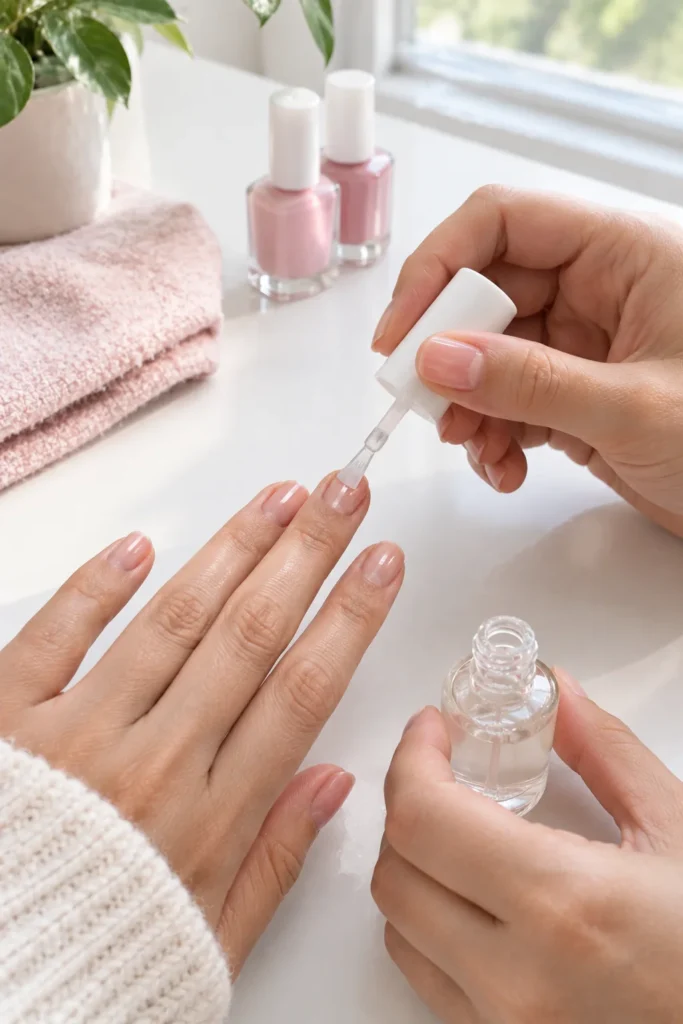
Polish that chips after two days usually gets blamed on the brand, but dry winter nails are often the real problem underneath.
A strengthening base coat gives the nail a firmer layer to grip and helps protect weak tips from snags. Many also smooth out ridges, so color goes on more evenly.
What to check before you buy:
- “Strengthening” or “nail hardener” on the label
- A formula you can wear alone on no polish days
- Reviews from people with peeling or bendy nails
12. Stop Peeling Off Gel Polish When Your Nails Feel Weak
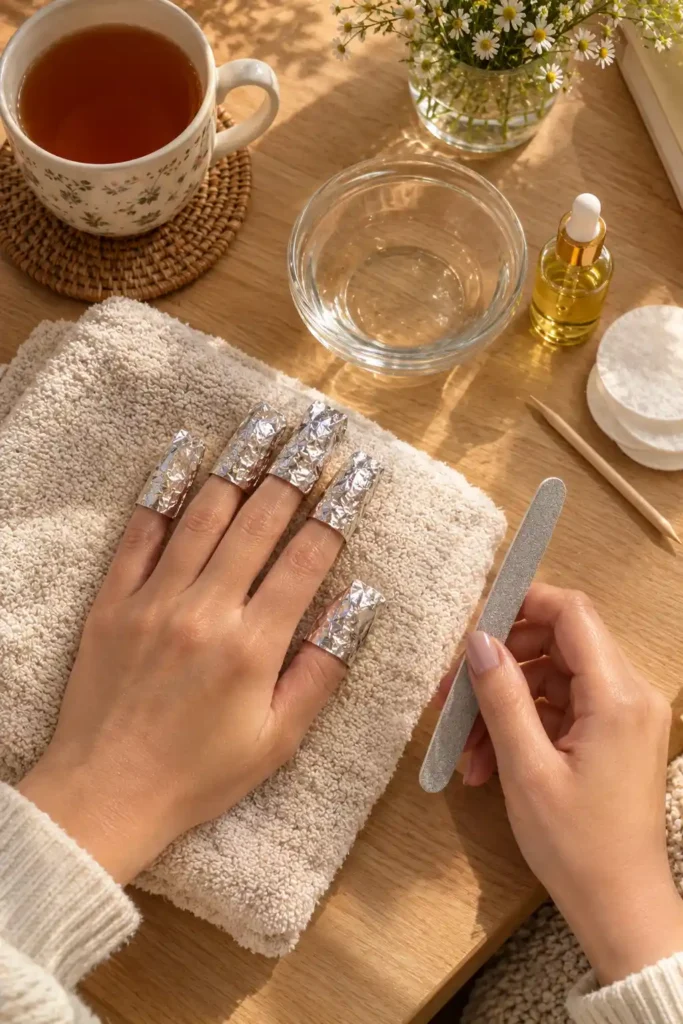
A lifted corner of gel looks like it wants to come off, and pulling it feels harmless, almost satisfying.
What actually peels away is the gel plus a thin layer of your nail stuck to it. That leaves the surface rough, thin, and patchy white, and winter dryness makes that damage even slower to grow out.
When gel starts lifting:
- File the lifted edge smooth so it stops catching
- Plan a proper removal within a few days
- Give nails a week off between sets if they feel thin
13. Keep Polish Removal Quick and Follow It With Oil
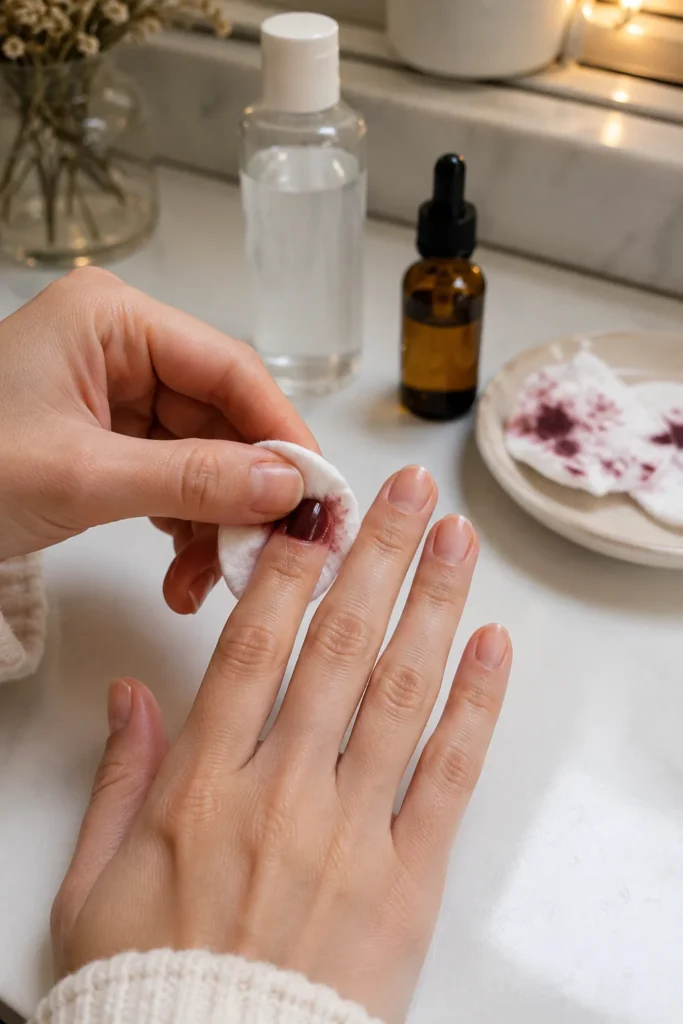
Get the polish off in as few wipes as possible.
Remover dries skin and nails whether it has acetone or not, and the dryness builds the longer you scrub. Letting a soaked pad sit on the nail first loosens the color, so one wipe does the work of ten.
Acetone free removers feel gentler, but they often need a lot of rubbing on dark winter shades. For deep berries and burgundies, a quick acetone swipe can end up easier on your nails than a long scrub.
14. Run a Small Humidifier Where You Sleep

Waking up with hands that don’t feel tight is a small win that makes cold mornings easier.
Indoor heating dries out the air, and your hands sit in that air all night. A small humidifier near the bed adds some moisture back, which helps your overnight balm do its job.
Keep it simple:
- A small cool mist model is plenty for one bedroom
- Use distilled or filtered water if your tap water is hard
- Empty and rinse the tank every day or two
15. A 20 Minute Sunday Winter Nail Care Reset
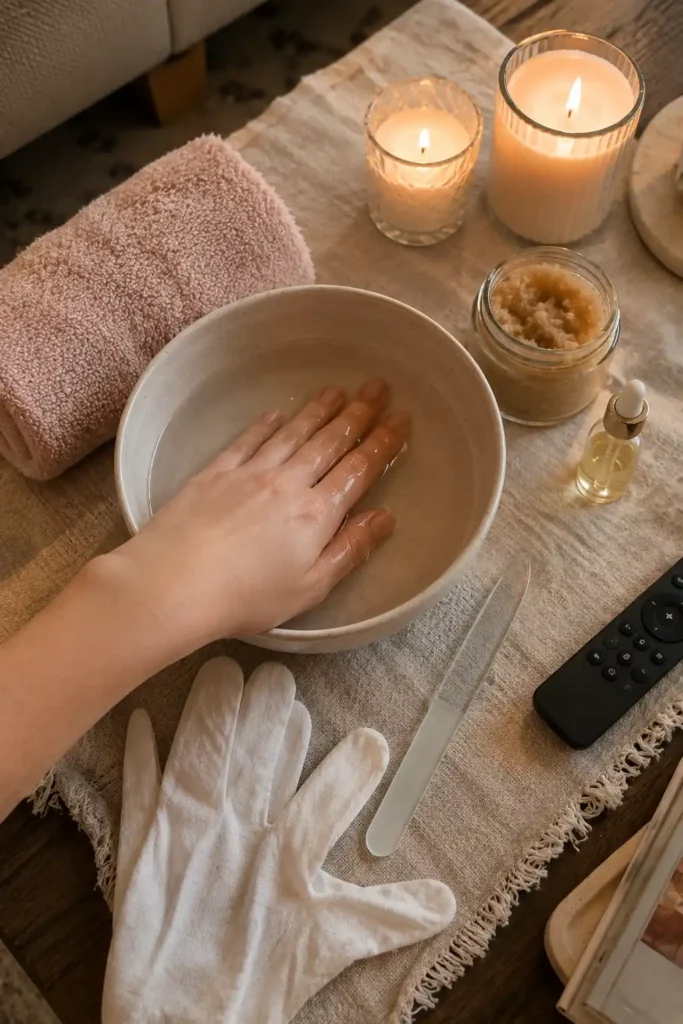
Sunday evenings usually have a quiet stretch after dinner, which makes them the easiest time to catch up on everything your hands went through that week.
Daily habits keep dryness in check. A weekly reset clears away the rough bits so those habits work better.
The 20 minute flow:
- Soak hands in warm, not hot, water with a few drops of oil for 5 minutes
- Gently scrub your knuckles and the sides of your fingers
- Push back softened cuticles with a towel, no cutting
- File, oil, then finish with a thick layer of balm
Conclusion
Dry winter hands rarely come from one big mistake. They come from hot rinses, harsh soap, bare hands at the bus stop, and polish scrubbed off in a hurry, all piling up over a few cold weeks.
That is actually good news, because the fix builds up the same way. A creamy wash here, gloves at the door there, thick balm a few nights a week. None of it takes long, and together it turns hands that sting into hands you stop thinking about.
Start with two or three habits from this winter nail care list and add more once they stick. Save this pin to your nail care board so it’s ready the next time your knuckles start feeling tight.